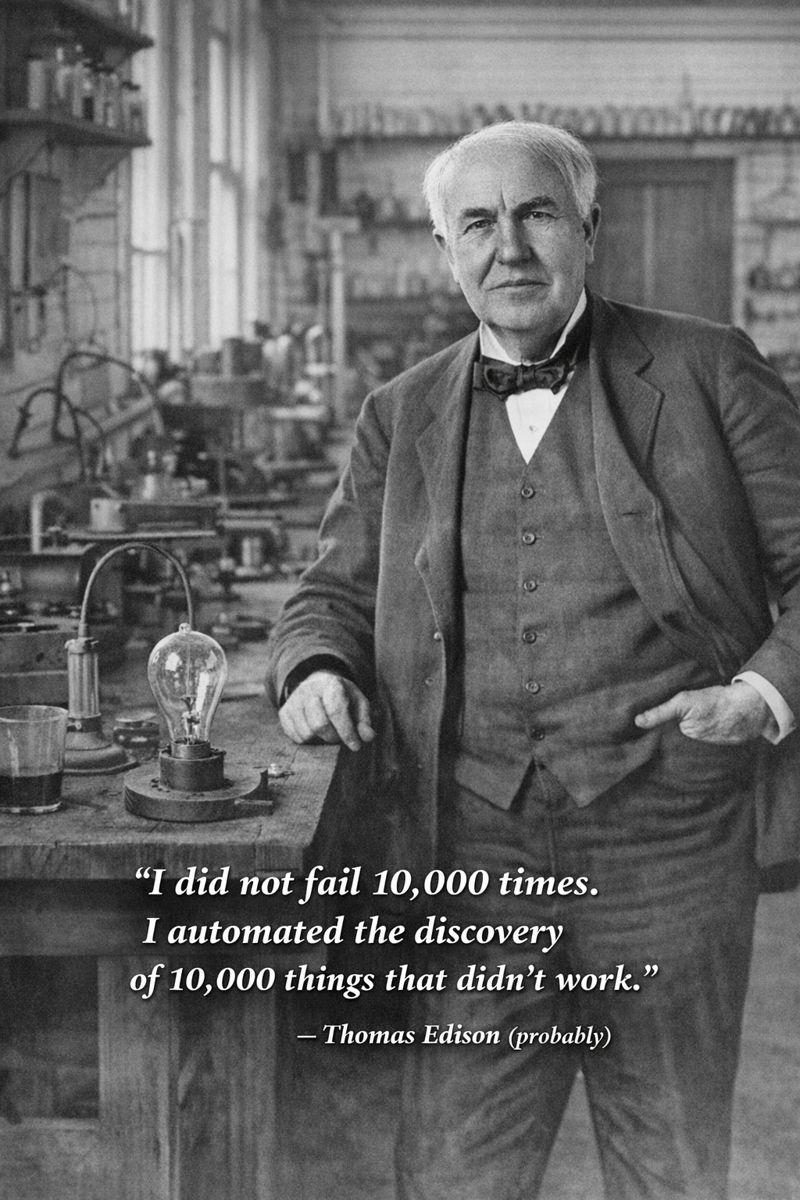
At the start of 2025, my goal was simple: build an automated short-form content pipeline and let quality emerge as a side effect of iteration.
By the end of the year, the system exists. The results are mixed. The lessons are sharp.
This post isn't a victory lap. It's a checkpoint—what actually worked, what quietly failed, and what changes as this moves into Q1 2026.
Lesson 1: Automation Worked Faster Than the Content
The most important thing I learned in 2025 is that systems mature faster than output.
In under two months, the pipeline went from "idea" to:
- 50+ Shorts published
- Fully automated scripting, capture, voice, motion, subtitles, export
- Consistent production in minutes, not hours
The content itself? Still rough. Still uneven. Still learning what it wants to be.
That's fine.
The goal was never great videos. The goal was a machine that can keep producing while I improve the rules.
That part worked.
What carries forward: Automation-first stays non-negotiable. Content polish comes after leverage, not before.
Lesson 2: The Algorithm Punishes Invisible Things
The biggest surprise of 2025 wasn't creative—it was mechanical.
Pre-mixed background music was quietly killing distribution.
Not retention. Not watch time. Distribution.
Videos with baked-in music—using YouTube's own royalty-free library—were suppressed 10–40× in impressions. When people did see them, retention was often excellent. They just weren't being shown.
The fix wasn't "no music forever." It was where the music is added.
What works:
- Upload voice-only videos
- Add music inside the YouTube Shorts editor
- Keep volume low (3–5%)
- Favor trending sounds the platform already understands
This reframed how I think about the algorithm: it doesn't judge intent—it flags risk.
What carries forward: No more baked-in audio. App-added music only. Distribution first, aesthetics second.
Lesson 3: Constraints Dictate Aesthetics (Not Taste)
Another subtle lesson: tool limitations shape creative choices, whether you like it or not.
Because Shorts' editor doesn't allow precise beat-matching:
- Beat-heavy music makes static visuals feel "off"
- Missed sync reads as low quality, even if nothing is technically broken
For static images with Ken Burns motion, the safest choices turned out to be:
- Synthwave / Retrowave
- Lo-Fi / Focus
- Dark ambient textures
Not because they're trendy—but because they forgive imperfect alignment.
That's a recurring theme: pick components that fail gracefully.
What carries forward: Atmospheric music for static visuals. No aggressive beats unless the visuals can keep up.
Lesson 4: Shorts Reward Clarity, Not Production Value
One assumption I had to unlearn in 2025:
"More visual variety equals better performance."
The data didn't agree.
Simple screenshots + slow motion + clear voice consistently outperformed:
- Over-edited visuals
- Busy motion
- Decorative complexity
What mattered more:
- The first 3 seconds
- A clear problem statement
- Audio that's easy to follow
Shorts didn't punish simplicity. They rewarded it.
What carries forward: Optimize for clarity and pacing before chasing visual sophistication.
Lesson 5: Writing Wasn't the Bottleneck—Visuals Are
I expected scripting to be the hardest part. It wasn't.
Script generation, tone control, and pacing rules stabilized quickly.
The real bottleneck turned out to be visuals, especially for anything beyond Shorts:
- Long-form content needs B-roll
- AI-generated cutaways lack consistency
- "Same style, different angle" is still unreliable
- Hands, terminals, and workflows are especially fragile
Shorts can survive on screenshots. Five- to ten-minute videos cannot.
What carries forward: Screenshots remain the backbone for Shorts. Long-form waits on a reliable B-roll strategy—AI, stock, or hybrid.
Lesson 6: Fully Autonomous Is a Spectrum
"Fire and forget" is not a switch—it's a gradient.
Right now:
- The pipeline runs automatically
- Humans still approve scripts and uploads
- Visual judgment isn't fully delegable yet
That's not failure. That's reality.
Pretending otherwise is how brittle systems get built.
What carries forward: Human-in-the-loop stays where it adds leverage. Automation expands where it removes friction.
What Changes in Q1 2026
Here's what moves forward, concretely:
Carry Forward
- Screenshot-based Shorts (they work)
- App-added music only
- Atmospheric audio choices
- Automation-first iteration
- Data over intuition
Change
- Stronger hook templates (problem first, not description)
- More subtitle experimentation
- Thumbnail automation becomes a priority
- Visual systems get more attention than scripts
- Long-form pauses until visuals catch up
The primitive pipeline keeps running. The ambitious one keeps getting built alongside it.
That's the pattern.
The Throughline
2025 didn't produce a perfect system. It produced ground truth.
What fails. What lies quietly. What actually moves the needle.
I'm not done refining content. I'm done guessing.
2026 starts with fewer assumptions—and a machine that's still learning.
More updates as it breaks.
~ OnlyParams Dev